Misty Copeland is American Ballet Theatre’s First Black Principal Dancer

Misty Copeland in 'Swan Lake' (Vanity Fair)

Misty Copeland in ‘Swan Lake’ (Vanity Fair)

Last week, the American Ballet Theatre (ABT) in New York City promoted dancer Misty Copeland to principal. Copeland is the first Black woman to attain the level of principal (the highest level possible for a dancer) in ABT’s 75-year history. (ABT has previously had one Black man reach principal: Desmond Richardson, who achieved the level in 1997.) Since she’s considered a classical ballet dancer, this is all the more rare.

Copeland is considered to be a ballet prodigy since she began studying at age 13, and began dancing in pointe shoes a mere three months (!) later. She came to the larger public’s attention when she starred in the now-famous UnderArmour 2014 ad spot “I Will What I Want,” which featured her dancing. Since then, Copeland has written a biography and a children’s book, appeared on the cover of “Time” for their 2015 Top 100 list, and was the subject of a documentery, “A Ballerina’s Tale,” that premiered at the Tribeca 2015 Film Festival.

Copeland’s notable roles include the titular role in “The Firebird,” Swanhilda in “Coppélia,” and the dual roles of Odette/Odile in “Swan Lake.” The “Swan Lake” roles were significant for Copeland, and the rest of the ballet world:

It was a symbolically significant moment in American arts, in which a black woman danced the role of ballet’s famed white swan—and sold out all of her performances from the moment tickets went on sale months earlier.

Copeland became a member of ABT’s corps de ballet in 2001, and was promoted to soloist in 2007. She’ll start as principal dancer on August 1st.
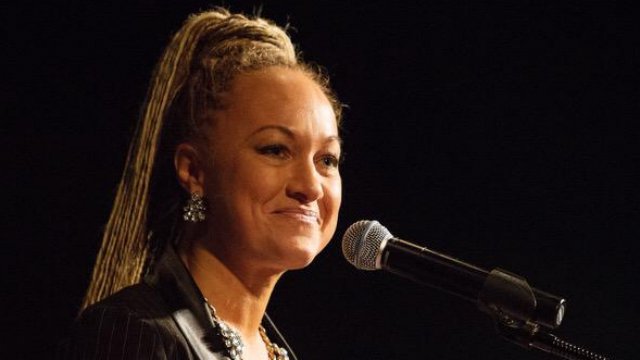
Rachel Dolezal: How Many White People Have Passed As Black?

Rachel Dolezal (Young Cons)

Rachel Dolezal (Young Cons)

This is pretty insane: It came out last week that Rachel Dolezal, the president of the National Association for the Advancement of Colored People (NAACP) chapter in Spokane, Washington, isn’t black at all. Not one drop.

She’s actually white.

Her story came out after a reporter asked her point-blank if she was black. Dolezal dodged the question. Since then, other aspects of Dolezal’s life have come to light: attending Howard University, telling people her adopted black brother (who lived with her) was really her son, and teaching classes on African-American culture at Eastern Washington University. Dolezal also claimed to have received hate mail.

Dolezal began identifying as black in 2007, after years of identifying with the culture.

I wanted to see if there were any stats on white people passing as black in the larger culture. I don’t mean in terms of appropriating dress or mannerisms, but actually altering one’s physical appearance and living an elaborate lie.

And I couldn’t find anything. Shocker (but not really). This is such a strange situation that I’m not surprised there haven’t been enough subjects to be studied.

The only white person who’s done anything remotely similar was John Howard Griffin, author of “Black Like Me.” Griffin underwent physical changes, including darkening his skin under heat lamps, to pass for a black man and report on racial injustices in the South firsthand. But obviously, his motives were very different than Dolezal’s.

It’ll be interesting to see how Dolezal’s case plays out, and if she’ll drop her black identity now that she’s been exposed.