
How Long Does Foreplay Last for Couples?

Couple in bed

Couple in bed

It sets us on the path to get the big O: foreplay. We’re told to put some time into it (i.e. around 20 minutes or so) before starting intercourse for good reason. But how much time do couples spend on it?

A 2013 “Glamour” survey delves deep into this one. They found that the majority (33%) spent a measly 5-9 minutes on foreplay, with 10-14 minutes (24%) and less than 5 minutes (23%) closely following. Longer foreplay times of 15-19 minutes and over 20 minutes clocked in at 12% and 8%, respectively.

But we can’t really glean a whole lot of information from this, due to the methodology (or what “Glamour” is willing to reveal about it). The article notes that it surveyed 1K+ “young women,” but we have no idea the age range of said women. So we can’t draw any conclusion on how long foreplay lasts based on age.

There’s also the self-selection bias, in that they only surveyed readers who would be up for spilling those details. And since “Glamour” readers tend to skew in their ’20s and ’30s, we’d only be able to see details within that range.

Bottom line: we could all stand to spend more time on foreplay, beginning with outside the bedroom.
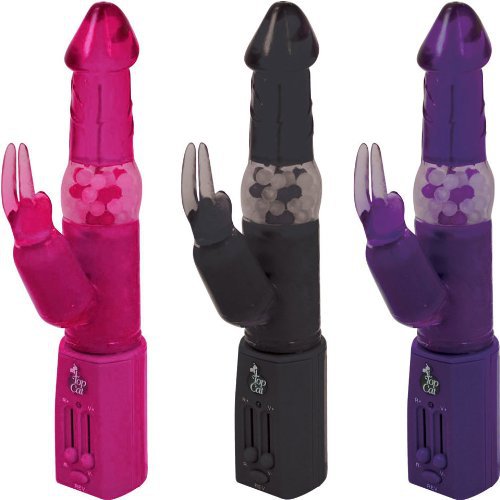
How Many People Use Vibrators?

Rabbit vibrators

Rabbit vibrators

You might think this is a no-brainer, that everyone uses one. Sure, it might be common in your circle of friends, if you’re pretty open about it. But what exactly are the hard stats on vibrator use?

A 2008 study shows that 53% of women have used a vibrator at some point in their lives. The study surveyed 2K+ women ages 18-60.

The study also found that 45% of men have used a vibrator at least once, out of a sample of 1K+ men within the same age range. However, the study does not mention whether the vibrators were used with or without a partner, and what age ranges within the larger set reported the most vibrator use. (This was true for the womens’ results as well.)

These results show that while most men may not be up for using vibrators to please their partners, there are some that exist out there.


Fetishes: Where are the Numbers?

BDSM Fetish-gear

BDSM Fetish-gear

Earlier this week, I was curious about finding statistics on fetishes of any kind. Guess what? It’s pretty hard to do for a few reasons.

The biggest one is that data from sexual studies is self-reported by the participants. Of course, these participants can easily lie. Maybe they’re ashamed of their fetish, or unwilling to give that information to a complete stranger. (Side note: I personally find it easier to lie to someone I know compared to someone I don’t, but that’s just a personal preference.) Either way, there’d be a large margin of error since the studies can’t account for those unwilling to tell the truth, and so fully participate.

The only way to get around this would be to subject male participants to a penile plethysmograph, which measures bloodflow to the penis. But this would obviously take a lot of time and investment into new practices. There’s also no female equivalent, so there’d be no way to compare.

Another reason is that something a study identifies as a fetish might be pretty vanilla for someone else. So there can be gaps between what two people believe to be fetishes, and that may play into their answers.

With the answers, part of the problem may lie in how the questions are phrased. If a question is leading, a participant may get flustered and answer the question in a way that diverges from what they actually feel and/or do.

But the overall question is: what is “normal” sex? There’s no agreed-upon baseline, so what exactly constitutes a fetish is hard to determine.

HIV: How Many People Are Living With It?

HIV-AIDS Logo

HIV-AIDS Logo

Though it’s declined since its discovery in the early 1980s, HIV is still a problem

A 2013 study from the Centers for Disease Control and Prevention (CDC) reported that over 1.1M people have HIV, with nearly 16% unaware of it. (For context, the 2010 Census reported a total of 308M+ US citizens.) The study looked at participants at least 13 years of age.

Unfortunately, we’re not able to see how the number distributes (i.e. are more people in their ’20s and/or ’30s affected than people in their ’40s and/or ’50s?), but that’d be useful to find out.


Faking It: Who’s Doing It?

Maybe she will, maybe she won't.

Maybe she will, maybe she won’t.

Women faking orgasms have been a staple of pop culture for, well, probably forever. (I’m sure there’s a cave painting illustrating this somewhere that’s yet to be discovered.) But just how common is it?

A recent study finds that 80% of women fake their Os. At first glance, this seems high, doesn’t it?

Like many sex stats, the data is self-reported. I’m wondering if even more women fake it, but didn’t admit to it during the study. Of course, there’s no way to confirm this, short of doing another survey, since some women might (understandably) lie.

There’s also the issue that the majority of women can’t come purely from vaginal intercourse. Did the study ask women if they can (by which I mean physically able to) come from vaginal penetration? The study’s abstract doesn’t elaborate on this point, but it might be within the whole study.

Either way, a large number of women are faking it for a variety of reasons.

Period Sex: Who’s Doing It?

Splattergore

Splattergore

“The Cut” published an article yesterday on period sex. While the overall excellent article was long on anecdotes, it lacked what I love: hard stats!

How many women are having period sex? It’s the thing we dread will ruin our steady dates and hot hookups, but some women have figured out that it doesn’t have to be that way.

In 2011, menstrual cup company Softcup released a survey that uncovered, among other things, how much a woman’s perdio affects her sex life. The survey found that 60% of all women are uncomfortable with period sex. It showed an age disparity: 70% of older women (ages 45-54) were uncomfortable, while only 51% of younger women (ages 18-34) were.

(I don’t know where women ages 35-44 disappeared to.)

It’s clear that the majority of women haven’t gotten into period sex. But based on the “NYMag” article, the men are having more fun than ever.


Gymnophobes/Never Nudes: How Common Are They?

Tobias Funke, Never Nude

Tobias Funke, Never Nude

Gymnophobia is a fear of nudity, whether it’s that person or someone else’s naked body. This fear might come alive most in dreams, but sometimes it might spill over into waking life.

A cultural example is Tobias Funke (played by David Cross) from “Arrested Development,” who was shown to be a “never nude:” He had serious problems stripping down, even for a shower. (The term has unofficially become the slang definition for the condition over a decade later. Seriously, ask your friends if they know what gymnophobia is, and then what a never nude is.)

But what percentage of the population are actually gymnophobes/never-nudes?

Unfortunately, there’s not any hard (heh) data on it. My guess is that since most sex-related data is self-reported (short of measuring blood flow to the genitals), people aren’t going to come forward to admit that they have this phobia. It makes logical sense, but hardly satisfies my curiosity.