How Many Husbands Take Their Wives’ Last Names?

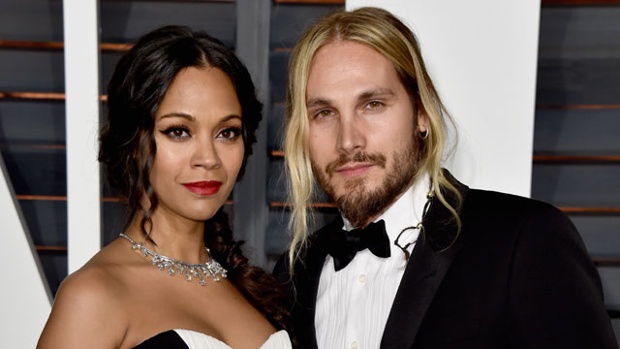
Zoe and Marco Saldana (KCCI)

Zoe and Marco Saldana (KCCI)

Happy Friday! Earlier this week, actress Zoe Saldana told “InStyle” that her husband Marco Perego wanted to take her last name, instead of having her take his. Saldana was initially hesitant:

I tried to talk him out of it. I told him, ‘If you use my name, you’re going to be emasculated by your community of artists, by your Latin community of men, by the world.’ But Marco looks up at me and says [in his Italian accent], ‘Ah, Zoe, I don’t give a sheet.’

Now, that’s a true man right there. Husbands taking their wife’s last name isn’t too common, at least anecdotally. But what about the data? Has it been tracked?

No, it hasn’t, at least not yet. I found several articles profiling couples who did it, but each article mentioned in some way that statistics weren’t tracked. Oh well. On the other hand, it’s a topic ripe for picking for a Ph.D. thesis. Any takers?

But Mr. Saldana (né Perego) made a huge impact. Meghan Blalock of “Who What Wear” puts his decision in context:

The storied history of women taking men’s last names in marriage is not just a trend or a matter of practicality—it’s a long-existing symptom of the patriarchal society in which we live, in which a marriage means that a woman is little more than a man’s property.

So his decision shows that he’s not just a traditionally masculine man, but that he has a sensitive side towards women and feminism, and isn’t afraid to show it. Pretty badass, right? Maybe we’ll see more men follow suit!


Brittney Griner/Glory Johnson Annulment: How Many Same-Sex Marriages End?

Glory Johnson and Brittney Griner (Forward Times Online)

Glory Johnson and Brittney Griner (Forward Times Online)

Phoenix Mercury star Brittney Griner filed for an annulment from her wife Glory Johnson, who plays for the Tulsa Shock. The two WNBA stars married May 8th, and Johnson announced her pregnancy June 4th.

With acceptance of same-sex marriage gaining ground, divorce will naturally follow. But how many same-sex marriages end?

It’s hard, and probably too early, to find concrete and up-to-date statistics on this. In 2011, UCLA’s Williams Institute found that same-sex couples who’ve formalized their commitment had a divorce rate of 1%+. This is lower than the annual divorce rate of heterosexual married couples, which is 2%.

Around 150K same-sex couples have married or otherwise committed to each other, so that would mean around 3K same-sex couples divorce each year. I couldn’t find any stats solely for annulments.

But in 2013, Pew Research Center’s FactTank found that same-sex marriages numbered around 71K+. It did take into account that there might be some underreporting going on.

As time passes and more same-sex marriages and divorces/annulments/separations are recorded, we’ll be able to see a clearer picture of any trends.


Bernie Sanders Essay: How Many Women Have Rape Fantasies?

Bernie Sanders (Crooks and Liars)

Bernie Sanders (Crooks and Liars)

Last week, “Mother Jones” found an essay that presidential hopeful Bernie Sanders wrote in 1972 for alternative newspaper “Vermont Freeman.” Sanders’ two-page essay observed sexual dynamics between men and women.

Here’s the part that got everyone talking:

A woman enjoys intercourse with her man — as she fantasizes being raped by 3 men simultaneously.

Sanders was positing this as a general observation that held true about all women. But is he correct in this assumption?

There’s been some research done on this fantasy.

Last year, researchers at the University of Canada, Quebec asked territory residents about their sexual fantasies and published results in the “Journal of Sexual Medicine.” Though the researchers didn’t directly ask about rape fantasies, they did ask respondents if they agreed with the statement “I have fantasized about being forced to have sex,” which can be construed as such. Over 28% of women agreed with that statement, but it wasn’t enough to hit the “normal fantasy” cutoff (which started at 50% agreement from respondents). The study didn’t examine how often the women had these fantasies.

A 2010 “Psychology Today” article on women’s rape fantasies stated that nine surveys on the topic had been published between 1973 and 2008. Here’s what that collective body of data showed:

They show that about four in 10 women admit having them (31-57%) with a median frequency of about once a month. Actual prevalence of rape fantasies is probably higher because women may not feel comfortable admitting them.

A 2009 study done by North Texas University found that answers depended on what terminology was used. Fifty-two percent of college women said they’d fantasized about being “overpowered by a man,” but only 32% of women agreed when it was labeled “rape.” It’s interesting to note that this range nestles right in the range quoted above.

There also appeared to be an inverse correlation between the number of women who reported having rape fantasies and the frequency with which they had them: 25% of women reported having the fantasy less than once a year, and 13% had the fantasy a few times a year. So while it might be a part of some women’s sexual fantasy playlist, it doesn’t pop up in the rotation with much frequency for those women.

Though Sanders was certainly on to something with his claim, the fantasy isn’t nearly as pervasive (or self-reported) as he made it seem. But Sanders did recognize the desires that that specific fantasy taps into: a woman being overpowered by a man who can’t stop himself from ravishing her. No wonder he recently compared it to “Fifty Shades of Grey.”

Josh Duggar Scandal: How Much Child Sexual Abuse Occurs Within Religious Cults?

Josh and Anna Duggar and their children (E! Online)

Josh and Anna Duggar and their children (E! Online)

Last month, eldest son of the “19 Kids and Counting” Duggar clan Josh Duggar admitted he’d sexually molested five girls when he was 14 years old in 2002, some of which were his sisters. (When these incidents took place, Duggar had five sisters, who ranged in age from four to 12.)

More revelations came out over the days that followed: Duggar was sent away to a friend who had a home remodeling business after he admitted what he’d done; he didn’t receive any counseling, contrary to what had initially been stated, and Duggar was given a minor talking-to from Arkansas State Trooper Jim Hutchens, who’s now in prison for child pornography. After the allegations came to light, a judge ordered the incriminating documents be destroyed, apparently on behalf of one of the alleged victims.

The Duggar family is part of the Quiverfull movement, a worldview that purports to be about Christianity and living Biblically. Earmarks of being Quiverfull include having lots of children (supplying Christian soldiers to prepare for the upcoming spiritual battle), dressing modestly and shaming victims of sexual abuse.

Until now, the fact that the Quiverfull movement is a cult has flown under the radar. But now it’s come under the scrutiny of a full-fledged public spotlight.

I wanted to find some statistics on sexual abuse, especially child/incestual sexual abuse, within cults. Unsurprisingly, I was unable to find anything. No long-range studies have been done. This makes sense: Cults usually want to cover their tracks, and make themselves look like they aren’t cults at all and are completely normal. In terms of gathering information, it’d be very hard to infiltrate and gain members’ trust to get an accurate picture of what occurs within one. Even if a member did admit to something, they might see it as totally normal.

Unfortunately, the statue of limitations on Duggar’s heinous acts has now expired. But now we have some idea of the long-ranging detrimental effects of the Quiverfull movement. There are better ways to help victims of sexual abuse and molestation, regardless of their personal viewpoint.


No Shit: People Who Have More Sex Are Happier

Couple in bed (Nairobi Today)

Couple in bed (Nairobi Today)

Happy Friday! Here comes a stat, courtesy of everyone’s favorite superhero Captain Obvious:

The more sex you have, the happier you’ll be.

Please tell me this is common sense and not an earth-shattering revelation.

According to a 2014 study from the University of Colorado-Boulder, led by researcher Tim Wadsworth, there’s a direct correlation between frequency of sexual activity and a person’s “happiness quotient.” And these two factors fed off each other:

“Those who reportedly had more sex were seen to be experience more happiness and vice versa.”

Since this is self-reported information, it’s hard to tell the degree to which subjects experienced more happiness. But hey, if they felt it, they felt it.

But Wadsworth has certainly done his due diligence in determining this assessment: He interviewed 15K+ subjects.

Why Are Girls Entering Puberty Earlier?

Teen girl (Barnorama)

Teen girl (Barnorama)

It might seem like teenage girls are looking younger and younger each year, but there’s some truth to that. Researchers are finding that the age of onset puberty has been declining over the years, and girls are beginning to physically resemble grown women at younger ages.

A 2010 study put out by “Pediatrics,” the American Academy of Pediatrics’ (AAP) journal, followed a cohort of 1.2K+ girls between the ages of six and eight years of age from New York, Cincinnati and San Francisco. The study measured breast “budding,” normally the first physical step in female puberty. The results found that girls were beginning this stage around ages seven or eight, which is earlier than girls who were born only 10 years ago. (Incidentally, there was no change in age of first menstruation.)

This is even earlier than what was found in a previous AAP study completed in 1997. That year, results showed that girls began puberty between eight and nine years of age.

So what’s been causing the change? There appears to be a link between sugary drinks and early onset puberty for girls. The study defined early puberty as age of first menstruation, but not by breast budding.

It appears more research is needed, but this is an issue that needs to be addressed sooner rather than later.

How Does Marijuana Affect Sex?

Medical marijuana grows, May 15, 2013, at the River Rock Medical Marijuana Center's natural light cultivation site in Denver. (Anthony Souffle/Chicago Tribune/MCT)

Medical marijuana grows, May 15, 2013, at the River Rock Medical Marijuana Center’s natural light cultivation site in Denver. (Anthony Souffle/Chicago Tribune/MCT)

Happy Friday! Some people have strong stances on whether or not they enjoy having sex while on marijuana or not. This makes sense anecdotally, but what do the numbers say?

Well, the data is split too. In the studies done on how marijuana affects sex (and there aren’t many), respondents are split on whether the drug enhances, inhibits or doesn’t affect fornication at all.

Studies have been done in the U.S. in the 1970s and 1980s, and in Canada during the last decade five years apart. The first study centered on hormone suppression by way of the drug, but failed to find any results. The 1980s study found that most respondents found using marijuana enhanced sex, though for other it had an adverse or negative effect on the act. Both of the two Canadian studies found that using marijuana enhanced sex for around half, or just over, the respondents.

More research is needed, especially since each of these studies had minuscule sample sizes (sample sizes have thus far ranged from 41 to 104 subjects) and so cannot be projected to the general population. We also don’t know the methodology used to find these results.

How Many People Identify as Asexual?

AVEN Logo (Asexuality.org)

AVEN Logo (Asexuality.org)

Along the spectrum of sexuality sits asexuality. (Actually for Alfred Kinsey, he put the concept outside his famous Kinsey Scale, marking it with an “X.”) Those who identify as asexual do not feel sexual desire and/or want sexual intercourse (though they may still have romantic feelings).

Asexuality and its nuances have been misunderstood for decades, as have those who self-identify with the term. So how many people identify as asexual?

It’s hard to say. Like many sexual statistics, it’s all self-reported. But there have been a few studies done.


Kinsey estimated that asexuals numbered around 1.5% of the adult male population in the later 1940s to early 1950s. But he didn’t mention female asexuals, and we don’t know how thorough his methodology was.

Elsewhere, a 2004 British study analyzed data and found that around 1.1% of Brits claimed the label. A recent article on “Wired” named estimates ranging from .6% to 5.5%.

There’s no definitive way to tell. But hopefully more data will be uncovered as research into asexuality grows.

How Large is the Transgender Population?

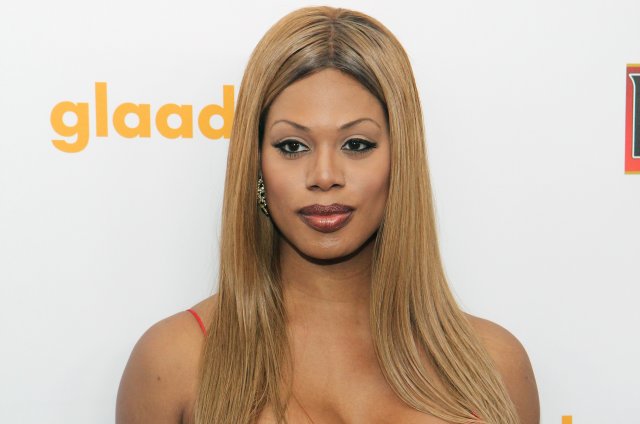
Laverne Cox (GLAAD)

Laverne Cox (GLAAD)

The transgender community is really stepping into the spotlight right now, and making progressive strides into mainstream society. So far this year, there’s been award-winning portrayals of transpeople, a transwoman becoming the face of a national advertising campaign and a prominent television personality going public with his transition story.

With all this progress, I was wondering exactly how large the U.S. transgender population numbers. I was fully prepared to find conflicting information or even no numbers, as I wasn’t sure how closely data was being tracked. The Transgender Law and Policy Institute has a fact sheet that claims 2-5% of the population is trans, but of course that’s self-reported and there’s no way of knowing how accurate it is.

Nate Silver’s data journalism site FiveThirtyEight posited one of my concerns in an article last year, that it’s difficult to get accurate data. Journalism Mona Chalabi mentions the widely-known stat from the University of California Los Angeles (UCLA) School of Law’s Williams Institute, which puts the transgender population at around 700K, or around .3% of the U.S. adult population. But Chalabi does acknowledge that more research is needed.


A lot of positive things are happening right now for the community, and hopefully that’s lead to even more acceptance and progress. And hopefully, more accurate numbers.

“Federal Agents Gone Wild:” The Department of Justice Has a Prostitute Problem

DEA chief Michele Leonhart (Girls Just Wanna Have Guns)

DEA chief Michele Leonhart (Girls Just Wanna Have Guns)

Yesterday, Michele Leonhart announced that she’d resign from her post as chief of the Drug Enforcement Agency (DEA) in early May. This comes after reports surfaced that some male employees were enjoying sex parties with prostitutes which were paid for by drug cartels in Colombia. And it had been going on for years. Conflict of interest much?

Earlier this month, Attorney General Eric Holder had to issue a department-wide memo for Department of Justice employees, reminding them that they are not allowed to solicit prostitutes under any circumstance. His point was that any employee who does this opens up himself, and the agency, to potential blackmail, extortion and leaking private information. (Seems like common sense to me.) I bet he never thought he’d have to write this kind of memo.

I tried to find if there were any other instances of this happening (since it was apparently uncovered during a routine Inspector General report), but couldn’t find anything. All stats I could find were more related to prostitution stats that the DOJ itself had reported on.

It’ll be interesting to watch how this all plays out, and what (if any) further punishments the DOJ partying employees will receive. (So far, employees who’ve confessed have only been suspended, but only up to a week-and-a-half.) It’s one thing to indulge in sex parties off the clock, but it’s another thing entirely to blur professional lines against those you’re supposed to be against (though I’m sure that was part of the appeal).