The Pentagon Will Pay to Freeze Troops’ Sperm and Eggs

Military troops (The Political Insider)

Military troops (The Political Insider)

Family-friendly policies have been proliferating workplace culture within the past year, and now there’s another company to add to that list: the Pentagon.

The Defense Department will a pilot program that allows troops to freeze sperm and eggs in an effort to retain service members. This policy is especially aimed at women: After 10 years of service (which would place a woman in her late 20s, assuming she enlisted when she was 18), women’s retention rate is 30% less than that of men’s. The cost is estimated to be around $150M for five years, or  $30M per year.

The move comes as the Defense Department noted changing policies that allowed for longer maternity leaves and “improved child care.” After creating a plan, the Defense Department will outline a plan, and will evaluate two years after implementation. The Defense Department is following in the footsteps of certain Silicon Valley companies such as Facebook, which recently began offering female employees the option of freezing their eggs.

So far, the Defense Department is the only government agency that will allow freezing sperm and eggs within their healthcare policy.

It’ll be interesting to see how the pilot program goes, and how it changes the quality of life for military members.


Japan’s Surviving Comfort Women Will Receive Reparations

Korean comfort women (Japan Daily Press)

Korean comfort women (Japan Daily Press)

On Dec. 28, the heads of Japan and South Korea came to an agreement over making reparations for the remaining comfort women.

For those who are unfamiliar, comfort women were Korean women who served Japan’s Imperial Army before and during World War II…as sex slaves. This happened during Japan’s colonial rule over South Korea, which lasted from 1910 to 1945, and contributed to strained relations that continue to this day.

It’s difficult to pinpoint exactly how many comfort women existed, since accurate records weren’t kept. Most estimates put it at a range around 100K to 200K. Women began coming forward about their experiences in the early 1990s.

Of the 238 women who’ve come forward in South Korea, only 46 survive.

Obviously, this is a huge abuse of women (not to mention that of human rights), so it’s good that Japanese Prime Minister Shinzo Abe and South Korean Foreign Minister Yun Byung-se are trying to make it right 70 years later.

In addition to a formal apology, Japan will provide $8.3M-worth of reparations. However, the money won’t go directly to the survivors; it’ll be used by South Korea to establish healthcare for the women.

These reparations are significant because it’s the first time the Japanese government will provide the money. In 1993, Japan set up donations provided by private donors, but it wasn’t fully accepted by South Korea. At that time, 60 South Korean women received aid from the donations.

It’ll be interesting to see how these reparations make a difference for the women, and how the action changes Japan and South Korea’s relationship.


Why Is the Number of Sexual Assaults Rising in New York City?

New York City skyline (The Huffington Post)

New York City skyline (The Huffington Post)

Certain types of violence are on the rise in the city that never sleeps. In addition to shooting and homicides increasing year-over-year, the number of rapes and sexual assaults has also increased.

But is it enough to panic over? Let’s look at the numbers. “The New York Times” reports:

From Jan. 1 to May 31, there were 540 rapes recorded in the city, an 8 percent increase over the same period last year, and more than 1,128 misdemeanor sex crimes, representing a rise of 18 percent.

But on the bright side, some types of sexual violence has declined within the city:

According to national data from the Centers for Disease Control in 2012, the rate of stranger rape as a percentage of all rape is 14 percent; in New York City this year, the rate is half that. Of the 540 reported rapes, 39 were committed by someone the victim did not know, according to the police.

But why are the overall numbers climbing? The phenomenon can be attributed to a simple economic principle: the complement effect. Numbers are climbing because more people are reporting them. And that’s a good thing! The more people that are aware of these crimes and can report them, the more accurate a picture we can get of just how rampant sexual assaults are.

I’m interested to see if this is, or will be, the case in other cities.


The White House Hires Its First Transgender Staffer

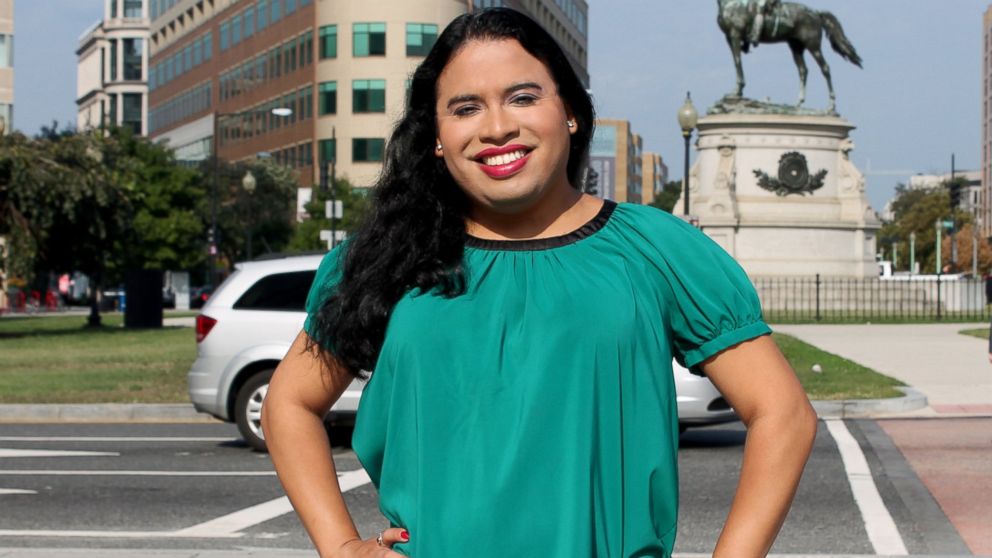
Raffi Freedman-Gurspan (ABC News)

Raffi Freedman-Gurspan (ABC News)

Last week, the Obama administration made a historic hiring: Raffi Freedman-Gurspan is the first transgender person hired to serve the White House. She’s not only the first transgender person, but also the first transwoman.

Freedman-Gurspan comes with a lot of experience to her new role: She had previously served as policy adviser at the National Center for Transgender Equality, and will be the recruitment and outreach director on Obama’s staff.

While the administration has hired other transgender people to other government agencies, this is the first time a transgender person will work directly with the White House.

The hiring indicates that President Obama is becoming more comfortable in openly supporting the LGBT community: Earlier this year, he spoke out about ending conversion therapy for LGBT youth.


Rachel Dolezal: How Many White People Have Passed As Black?

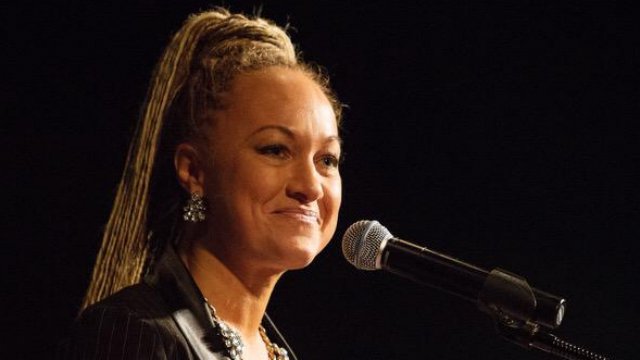
Rachel Dolezal (Young Cons)

Rachel Dolezal (Young Cons)

This is pretty insane: It came out last week that Rachel Dolezal, the president of the National Association for the Advancement of Colored People (NAACP) chapter in Spokane, Washington, isn’t black at all. Not one drop.

She’s actually white.

Her story came out after a reporter asked her point-blank if she was black. Dolezal dodged the question. Since then, other aspects of Dolezal’s life have come to light: attending Howard University, telling people her adopted black brother (who lived with her) was really her son, and teaching classes on African-American culture at Eastern Washington University. Dolezal also claimed to have received hate mail.

Dolezal began identifying as black in 2007, after years of identifying with the culture.

I wanted to see if there were any stats on white people passing as black in the larger culture. I don’t mean in terms of appropriating dress or mannerisms, but actually altering one’s physical appearance and living an elaborate lie.

And I couldn’t find anything. Shocker (but not really). This is such a strange situation that I’m not surprised there haven’t been enough subjects to be studied.

The only white person who’s done anything remotely similar was John Howard Griffin, author of “Black Like Me.” Griffin underwent physical changes, including darkening his skin under heat lamps, to pass for a black man and report on racial injustices in the South firsthand. But obviously, his motives were very different than Dolezal’s.

It’ll be interesting to see how Dolezal’s case plays out, and if she’ll drop her black identity now that she’s been exposed.

Thursday Trends: Female Celebrities’ Fluid Sexuality

Maria Bello (Salon)

Maria Bello (Salon)

Last week, actress Maria Bello released her new memoir. “Whatever…Love Is Love” chronicles Bello’s journey as a single mom who self-identified as straight, but then unexpectedly fell in love with her female best friend. She penned a piece for “The New York Times” in 2013 that centered on worrying how her son would react to the news. (If you’re wondering, his response is her memoir title verbatim.) From there, Bello decided to redefine her relationships in a way that worked for her, and she now sexually identifies as a “whatever.”

Bello isn’t the only female public figure whose sexuality has shifted within the public eye. Oscar-winning actress Tatum O’Neal recently revealed that she likes and has been dating mostly women for some time now. O’Neal didn’t self-identify as lesbian or bisexual (she had previously been married to, and had children with, tennis ace John McEnroe), and says she’s “not one or the other.”

The millennial generation also has its share of sexually fluid women who eschew labels. Actress Amber Heard dated photographer Tasya van Ree before marrying actor Johnny Depp earlier this year. She also doesn’t label herself “one way or another.” Actress Lindsay Lohan famously had a volatile relationship with DJ Samantha Ronson, but then publicly self-identified as straight years after the relationship was over.

Though the majority of examples come from entertainment, the political sphere can claim on entrant. Chirlane McCray, wife of New York City mayor Bill de Blasio, self-identified as a lesbian when she met her now-husband in 1991. Years earlier in 1979, McCray had written an essay for “Essence,” titled “I Am A Lesbian,” which centered on gays and lesbians within the black community. McCray’s essay didn’t receive much attention until just before her husband decided to run for mayor in 2012.

What’s interesting about McCray’s case is how others in the media reacted to it: Many termed her some variation of “former lesbian.” But McCray never self-identified as anything remotely resembling that. Here’s how she responded in 2013 when asked if she self-identified as bisexual:

I am more than just a label. Why are people so driven to labeling where we fall on the sexual spectrum? Labels put people in boxes, and those boxes are shaped like coffins. Finding the right person can be so hard that often, when a person finally finds someone she or he is comfortable with, she or he just makes it work.

It’s fantastic how so many women (and people in general) are gaining the courage to step outside the box and do what works for them, especially in terms of sexuality and relationships. What I love about the above examples is that they’re all open to new experiences and don’t use labels to limit them. And that’s just beautiful.

Sofia Vergara’s Frozen Embryos: Is There A Precedent for IVF Egg Custody?

Sofia Vergara (Celebrity Post)

Last week, “Modern Family” actress Sofia Vergara’s former fiancé Nick Loeb penned an op-ed for “The New York Times” regarding Vergara’s frozen eggs. The pair had initially frozen the eggs via in-vitro fertilization (IVF) in case they later wanted children, before their relationship ended last year. (Vergara is currently engaged to “True Blood” actor Joe Manganiello.) Now Loeb wants to unfreeze an eggs to implant within a surrogate, and have a child using his ex-fiance’s egg. (When the two were together, they had signed an agreement regarding using the eggs only with permission from both of them, but there wasn’t any discussion on what might happen if they split.) Vergara, as owner of said egg(s), is (naturally and understandably) refusing to release her eggs.

I wanted to find out of there was a precedent set for IVF egg custody. According to “Chicago Lawyer” magazine, there are no definitive laws or one-approach-fits-all (yet), but 10 states so far have made rules regarding IVF custody and procedure cases.

One big commonality between a lot of these approaches is an issue familiar to sexuality: consent. Courts are generally weighing the desires of each partner, called “balance of interests.” This can be applied if one partner wants to use the eggs, but the other doesn’t want that person to use them. Iowa takes a “co-consent” approach, in that both parties must agree to “sign off when the embryo is implanted in the woman.”

Contracts guide decisions in other states. In these instances, courts rely on “contracts drawn up by the couple before the embryos were created.”  New York, Washington, Texas and Oregon follow this method.

Some states take a blended approach (kind of like a blended orgasm). Tennessee, New Jersey and Pennsylvania first look for existing contracts between both parties before moving on to consent.

Other states are complete outliers in their approach. Iowa has “contemporaneous-mutual-consent,” which is a written agreement that states that both parties must sign off on use of the embryos. Massachusetts is another outlier, stating that the woman receives custody of the embryos in event of divorce.

Vergara and Loeb’s situation may bring attention to this dilemma shared by other ex-couples, and it could drive inquiries and move future legislation forward. We’ll have to see how it plays out.