#ThrowbackThursday: John Ashcroft Covers the Spirit of Justice Statue’s Nudity, 2002

U.S. Attorney General John Ashcroft and Spirit of Justice statue, 2002 (Medieval POC Tumblr)

U.S. Attorney General John Ashcroft and Spirit of Justice statue, 2002 (Medieval POC Tumblr)

So this became weirdly relevant again: In 2002, Attorney General John Ashcroft put up drapes (that cost $8,000) on the Spirit of Justice statue housed in the U.S. Department of Justice in Washington, D.C. Why? Ostensibly to make a better backdrop for television. What Ashcroft didn’t mention was that his head was generally centered in between Lady Justice’s nude breasts. Better backdrop, my ass.

Just yesterday, Rome’s Capitoline Museum covered up classical nude statues before a press conference with Iranian President Hassan Rouhani occurred. There seems to be some confusion as to who and why this happened: Though the Iranian embassy asked that the statues be covered, neither Italy’s Culture Minister Dario Franceschini nor Prime Minister Matteo Renzi had been aware of the request.

An investigation into the matter is currently underway.


Zika Virus Linked to Birth Defects

Mosquito (NPR)

Mosquito (NPR)

Earlier this month, the Centers for Disease Prevention and Control (CDC) released a travel warning for pregnant women. They’ve issued the warning for 14 countries where the Zika virus has been confirmed to be transmitted.

Transmitted through bites of infected mosquitos, the Zika virus symptoms include fever, rashes and red eyes. It’s also been linked to birth defects.

Brazil was the first country to report birth defects linked to Zika. Specifically, the virus manifests as microcephaly, where newborns will have an unusually small head that leads to abnormal brain development. Over 2.4K cases of newborns affected by Zika were recorded in 2015, up from only 147 cases in 2014. This was a 1,532%+ year-over-year increase.

And the U.S. is no longer exempt from Zika’s reach: A baby with microcephaly was confirmed to have the virus. The baby was born in Hawaii last week.


Saudi Women Win 20 Seats in Elections

Saudi Woman voting (Haaretz)

Saudi woman voting (Haaretz)

In Saudi Arabia, women have now gained a step towards equality: holding office.

In the recent elections held on Dec. 12 of last year, 20 women were elected to municipal seats. They comprise almost 10% of the 2.1K seats available. These seats were the only ones Saudi citizens vote for.

This was the first time women were allowed to vote in municipal elections. The most recent elections were held in 2005 and 2011.

Women were allowed to campaign for seats, albeit in a limited manner. They were not allowed to give out material that showed their faces (though this applied to both men and women), and could not speak to male audiences directly. (A candidate would have to speak from behind a partition or enlist a male relative to speak for her.) Women comprised 979 out of 7K candidates, or nearly 14%.

Around 130K+ women registered to vote, with the voting age being 21. There are 12.2M+ total women, and election officials estimated around 5M women would be eligible to vote. The country’s total population is around 30M.

This speaks to some good progress being made, and I hope there’s more on the horizon. This could happen: Before King Abdullah died, he decreed in 2013 that the Consultive Council, an appointed body that advises the king, be made up of 20% women.

Japan’s Surviving Comfort Women Will Receive Reparations

Korean comfort women (Japan Daily Press)

Korean comfort women (Japan Daily Press)

On Dec. 28, the heads of Japan and South Korea came to an agreement over making reparations for the remaining comfort women.

For those who are unfamiliar, comfort women were Korean women who served Japan’s Imperial Army before and during World War II…as sex slaves. This happened during Japan’s colonial rule over South Korea, which lasted from 1910 to 1945, and contributed to strained relations that continue to this day.

It’s difficult to pinpoint exactly how many comfort women existed, since accurate records weren’t kept. Most estimates put it at a range around 100K to 200K. Women began coming forward about their experiences in the early 1990s.

Of the 238 women who’ve come forward in South Korea, only 46 survive.

Obviously, this is a huge abuse of women (not to mention that of human rights), so it’s good that Japanese Prime Minister Shinzo Abe and South Korean Foreign Minister Yun Byung-se are trying to make it right 70 years later.

In addition to a formal apology, Japan will provide $8.3M-worth of reparations. However, the money won’t go directly to the survivors; it’ll be used by South Korea to establish healthcare for the women.

These reparations are significant because it’s the first time the Japanese government will provide the money. In 1993, Japan set up donations provided by private donors, but it wasn’t fully accepted by South Korea. At that time, 60 South Korean women received aid from the donations.

It’ll be interesting to see how these reparations make a difference for the women, and how the action changes Japan and South Korea’s relationship.


Trends: Companies Expanding Maternity/Paternity Leave Policies

Netflix 2014 logo (Under Consideration)

Netflix 2014 logo (Under Consideration)

A very positive trend has sprung up recently: Companies are their expanding parental leave policies. The main goal is to recruit more women with work-life balance policies, and to retain talent by allowing time off for family matters. Because trouble at home often means distracted employees and lower productivity. (I feel like that’s on a modern-day Mather Work Incentive poster somewhere.)

Big strides have been made this year: Consulting powerhouse Accenture bumped up its maternity leave policy to 16 weeks in March, which applies to both full-time and part-time employees. In April, Johnson & Johnson announced a new eight-week paid leave policy. In June, major bank Goldman Sachs began offering new fathers and “non-primary caregivers” four weeks of paid leave. (The company currently offers 16 weeks of paid maternity leave.) The U.S. Navy and Marines mandated an 18-week maternity leave policy, effective immediately, in July.

This trend has become especially prevalent in the tech industry, with a lot of changes occurring just this past month. In August, Microsoft recently announced a new parental leave policy, in which employees would get paid at 100% of their salary for 12 weeks. New mothers will have eight weeks of paid maternity leave, which, combined with disability leave, could entitle them to 20 weeks of paid leave.

Adobe’s policy also changed: Mothers will now receive 26 weeks of paid leave, up from the nine weeks off from the previous policy. It’ll be a combination of medical leave (10 weeks) and paternal leave (16 weeks).

Netflix announced they’re bumping up their maternity and paternity leave policies to an unlimited amount of time. New mothers and fathers are allowed to take as much time off as they like during a child’s first year, whether though birth or adoption. (Netflix isn’t a stranger to expanding time off: Employees already get unlimited vacation time.) But the policy isn’t all inclusive: It only applies toward salaried employees, so hourly workers aren’t able to take advantage of it.

It’ll be interesting to see if (when) other companies follow suit, and if paid parental leave will eventually be federally mandated. These are definitely steps in the right direction.


How Common Is Female Genital Mutilation (FGM) in the U.S.?

Girls (The Borgen Project)

Girls (The Borgen Project)

Generally, when people the phrase “female gentile mutilation,” they think of countries where that’s a common practice. Well, actually, many people tend to think of just one continent: Africa. It’s implied that since Africa is less developed and empowered, people don’t think it can happen in the U.S.

Well, it does. And significantly. FGM has been coming to light recently here in the U.S. For a quick primer: Forms of FGM include removing the clitoris to completely sewing the vagina lips shut, done for non-medical purposes. The procedure is usually done without anesthesia, and leaves victims with severe repercussions, especially with the reproductive system. The main goal is to ensure the victim’s virginity and sexual loyalty to her partner.

The Population Reference Bureau studied the rate of FGM in the U.S., and published results earlier this year. It’s estimated that 507K+ women have either had the procedure done, or are at-risk of having it. (The results gave no way to break down the number further into those who definitively have had it done.) Some commonalities have been found about those at risk:

The estimated number of girls at risk is based on the number of daughters of immigrants from countries, mostly in Africa and from some communities in Asia, living in the U.S.

Over 166K women at risk are under the age of 18.

Prior to these results, a study was performed in 2000. Fifteen years ago, it was estimated 227K+ women were at risk for FGM. (It’s unclear as to whether the number included women who’d had the procedure done.)

Performing FGM in the U.S. was made illegal in 1996, and the practice of sending a girl to another country for the procedure (termed “vacation cutting”) was made illegal in 2013. It’s clear there are not enough protections in place to stop this barbaric practice, so I hope strides will be made in the right direction.

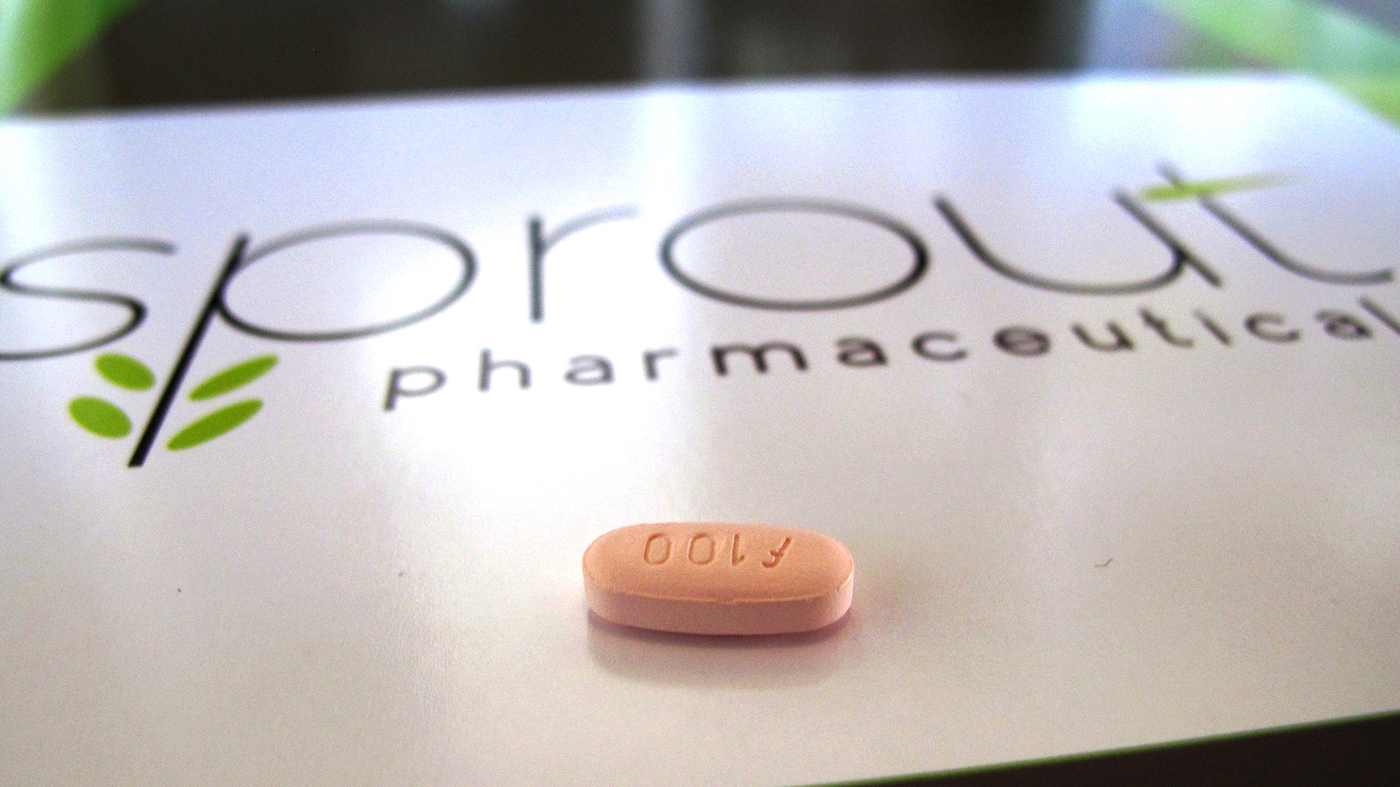
Sprout Pharmaceuticals’ Female Viagra Closer to Becoming Publicly Available

The experimental drug flibanserin, made by Sprout Pharmaceuticals, is at the center of a regulatory controversy.

The experimental drug flibanserin, made by Sprout Pharmaceuticals, is at the center of a regulatory controversy.

Sprout Pharmaceuticals has developed what they’re calling the Viagra for women. The new drug, named Flibanserin, purports to treat hypoactive sexual desire disorder (low sex drive, in other words) in pre-menopausal women. So far, $50M has been raised in preparation for the drug’s launch, and the Food & Drug Administration (FDA) has approved its benefits/risk profile.

The drug, now known as ADDYI, has had a long road thus far:  The drug was first rejected in 2010, when it was determined that the risks outweighed the dubious (at the time) benefits. Sprout began working on the drug in 2011, after being sold by the drug’s initial developer Boehringer Ingelheim. In December 2013, the FDA had rejected the drug for the second time.

In February 2014, the FDA wanted to see more tests done, specifically how the drug behaved when used with other medications. (Almost 10% of women taking the pill reported sleepiness during the trial.) The company resubmitted New Drug Application (NDA) this past February. The “little pink pill” was approved by an FDA advisory committee (done one step before final FDA approval), provided that more safety restrictions were added.

So far, Flibanserin/ADDYI has been tested on 11K+ women, and claims to be the “one of the most studied women’s health products in history.” Here’s what Sprout found after some recent trials:

In three 24-week randomized Phase 3, six-month, double-blind, placebo-controlled, parallel-group North American studies of premenopausal women with a mean age of 36 years, ADDYI consistently demonstrated a highly statistically significant difference over placebo on three key endpoints, including increase in sexual desire, decrease in distress from the loss of sexual desire and increase in the frequency of satisfying sex. Women treated with ADDYI showed significant improvements at every point of measurement in all pivotal clinical trials, with benefits seen as early as four weeks and sustained over the 24-week treatment period.

It’s too early to know when the drug will hit the public market. But it’ll be interesting to see how it performs (haha).

Thursday Trends: Female Celebrities’ Fluid Sexuality

Maria Bello (Salon)

Maria Bello (Salon)

Last week, actress Maria Bello released her new memoir. “Whatever…Love Is Love” chronicles Bello’s journey as a single mom who self-identified as straight, but then unexpectedly fell in love with her female best friend. She penned a piece for “The New York Times” in 2013 that centered on worrying how her son would react to the news. (If you’re wondering, his response is her memoir title verbatim.) From there, Bello decided to redefine her relationships in a way that worked for her, and she now sexually identifies as a “whatever.”

Bello isn’t the only female public figure whose sexuality has shifted within the public eye. Oscar-winning actress Tatum O’Neal recently revealed that she likes and has been dating mostly women for some time now. O’Neal didn’t self-identify as lesbian or bisexual (she had previously been married to, and had children with, tennis ace John McEnroe), and says she’s “not one or the other.”

The millennial generation also has its share of sexually fluid women who eschew labels. Actress Amber Heard dated photographer Tasya van Ree before marrying actor Johnny Depp earlier this year. She also doesn’t label herself “one way or another.” Actress Lindsay Lohan famously had a volatile relationship with DJ Samantha Ronson, but then publicly self-identified as straight years after the relationship was over.

Though the majority of examples come from entertainment, the political sphere can claim on entrant. Chirlane McCray, wife of New York City mayor Bill de Blasio, self-identified as a lesbian when she met her now-husband in 1991. Years earlier in 1979, McCray had written an essay for “Essence,” titled “I Am A Lesbian,” which centered on gays and lesbians within the black community. McCray’s essay didn’t receive much attention until just before her husband decided to run for mayor in 2012.

What’s interesting about McCray’s case is how others in the media reacted to it: Many termed her some variation of “former lesbian.” But McCray never self-identified as anything remotely resembling that. Here’s how she responded in 2013 when asked if she self-identified as bisexual:

I am more than just a label. Why are people so driven to labeling where we fall on the sexual spectrum? Labels put people in boxes, and those boxes are shaped like coffins. Finding the right person can be so hard that often, when a person finally finds someone she or he is comfortable with, she or he just makes it work.

It’s fantastic how so many women (and people in general) are gaining the courage to step outside the box and do what works for them, especially in terms of sexuality and relationships. What I love about the above examples is that they’re all open to new experiences and don’t use labels to limit them. And that’s just beautiful.

Bernie Sanders Essay: How Many Women Have Rape Fantasies?

Bernie Sanders (Crooks and Liars)

Bernie Sanders (Crooks and Liars)

Last week, “Mother Jones” found an essay that presidential hopeful Bernie Sanders wrote in 1972 for alternative newspaper “Vermont Freeman.” Sanders’ two-page essay observed sexual dynamics between men and women.

Here’s the part that got everyone talking:

A woman enjoys intercourse with her man — as she fantasizes being raped by 3 men simultaneously.

Sanders was positing this as a general observation that held true about all women. But is he correct in this assumption?

There’s been some research done on this fantasy.

Last year, researchers at the University of Canada, Quebec asked territory residents about their sexual fantasies and published results in the “Journal of Sexual Medicine.” Though the researchers didn’t directly ask about rape fantasies, they did ask respondents if they agreed with the statement “I have fantasized about being forced to have sex,” which can be construed as such. Over 28% of women agreed with that statement, but it wasn’t enough to hit the “normal fantasy” cutoff (which started at 50% agreement from respondents). The study didn’t examine how often the women had these fantasies.

A 2010 “Psychology Today” article on women’s rape fantasies stated that nine surveys on the topic had been published between 1973 and 2008. Here’s what that collective body of data showed:

They show that about four in 10 women admit having them (31-57%) with a median frequency of about once a month. Actual prevalence of rape fantasies is probably higher because women may not feel comfortable admitting them.

A 2009 study done by North Texas University found that answers depended on what terminology was used. Fifty-two percent of college women said they’d fantasized about being “overpowered by a man,” but only 32% of women agreed when it was labeled “rape.” It’s interesting to note that this range nestles right in the range quoted above.

There also appeared to be an inverse correlation between the number of women who reported having rape fantasies and the frequency with which they had them: 25% of women reported having the fantasy less than once a year, and 13% had the fantasy a few times a year. So while it might be a part of some women’s sexual fantasy playlist, it doesn’t pop up in the rotation with much frequency for those women.

Though Sanders was certainly on to something with his claim, the fantasy isn’t nearly as pervasive (or self-reported) as he made it seem. But Sanders did recognize the desires that that specific fantasy taps into: a woman being overpowered by a man who can’t stop himself from ravishing her. No wonder he recently compared it to “Fifty Shades of Grey.”

By The Numbers: How Many States Require an Ultrasound Viewing Before an Abortion?

WASHINGTON, DC - MARCH 16: Wisconsin Gov. Scott Walker speaks at the 2013 Conservative Political Action Conference (CPAC) March 16, 2013 in National Harbor, Maryland. The American Conservative Union held its annual conference in the suburb of Washington, DC to rally conservatives and generate ideas.  (Photo by Pete Marovich/Getty Images)

WASHINGTON, DC – MARCH 16: Wisconsin Gov. Scott Walker speaks at the 2013 Conservative Political Action Conference (CPAC) March 16, 2013 in National Harbor, Maryland. The American Conservative Union held its annual conference in the suburb of Washington, DC to rally conservatives and generate ideas. (Photo by Pete Marovich/Getty Images)

Earlier this week, Wisconsin Republican governor/maybe-presidential hopeful Scott Walker signed a new law requiring that women who wanted to get abortions be required to get an ultrasound of the fetus before making their decision. Walker’s reasoning was that he wanted women to make informed choices (i.e. choose life!) about their unborn children. (Side note: he also referred to ultrasounds as “a cool thing out there.” I’m not touching that one.)

I wanted to find out how widespread the practice of requiring expectant mothers to view an ultrasound before proceeding with an abortion was. So I turned to trusty source The Guttmacher Institute for some stats.

Number of states that require giving contextual information (i.e. written materials and/or verbal counseling) around the ultrasound: 12

Number of states that require the abortion provider to show and describe the ultrasound: 3

Number of states that require the abortion provider to offer a viewing of the ultrasound if it’s part of the abortion process: 9

The Guttmacher has more numbers on this topic. Personally, I find it fascinating that these laws are essentially banking on the assumed fact that women are ruled by their emotions and are baby-crazy, and so seeing an ultrasound before an abortion would change their minds.