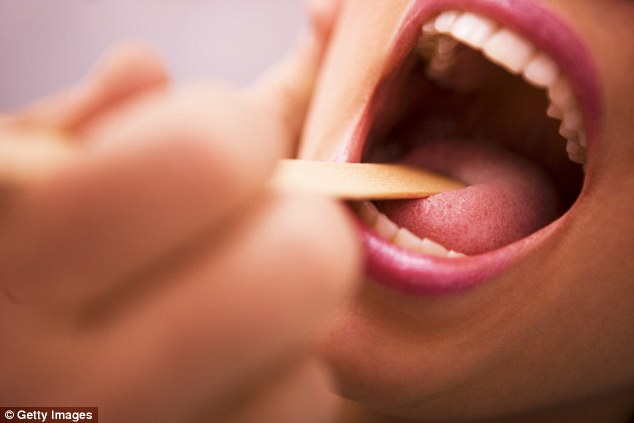
Link Between Tonsils and Appendix and Fertility Discovered

Tonsils (Daily Mail UK)

Today in “Things You (Probably) Wouldn’t Guess:” Scientists have discovered that the presence of tonsils or an appendix affects fertility.

A study conducted by University of Dundee and University College London found that if woman had either organ removed, they were more likely to both to become pregnant, but also to get pregnant earlier in life. (If you remember from middle school math class, this is what’s called an inverse relationship.) The study followed 530K+ women in the UK over a 15-year period. Over 54K women had their appendix removed, 112K+ women had their tonsils removed, and 10K+ women had both appendices and tonsils removed.

Women who’d had their appendix removed got pregnant at a 34% higher rate than women who still had their appendix. Women who’d had their tonsils removed got pregnant at a 49% (!) higher rate than women who still had their tonsils. And women who’d had both procedures got pregnant at a 43% higher rate than women who had not undergone both procedures.

It’s not clear yet why these things are linked together. But it flies in the face of long-time conventional medical wisdom, which had previously declared that removing a woman’s appendix affected her future fertility due to scarring around her fallopian tubes (a crucial passage for her eggs).
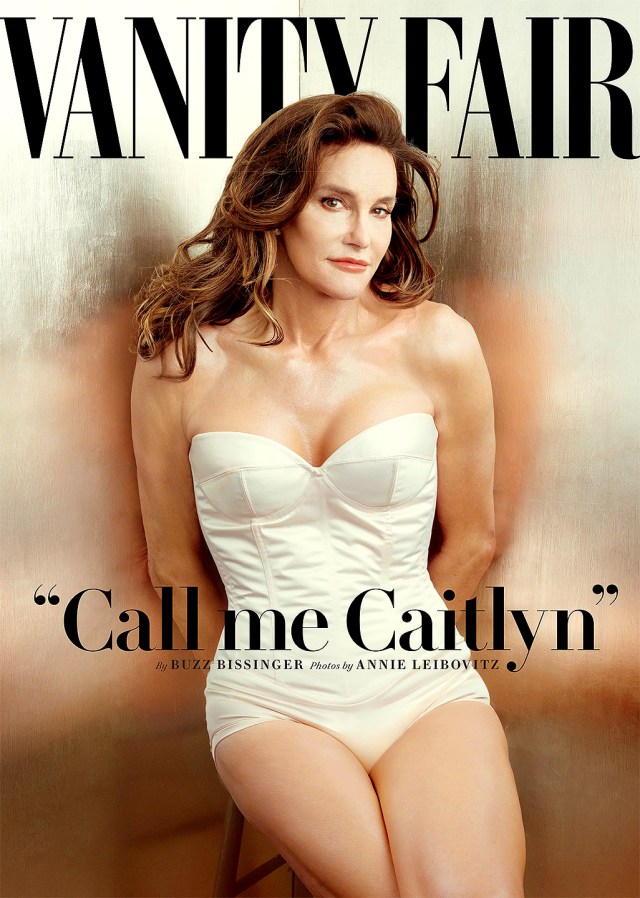



#ThrowbackThursday: Caitlyn Jenner’s “Vanity Fair” Cover, 2015

Caitlyn Jenner on the 'Vanity Fair' cover (Us Magazine)

Caitlyn Jenner on the ‘Vanity Fair’ cover (Us Magazine)

One year ago yesterday, Caitlyn Jenner made her official debut covering the “Vanity Fair” June 2015 issue. Vamping in a white strapless dress with a sweetheart neckline, emblazoned with the instantly iconic command: “Call Me Caitlyn.”

So much has happened since Jenner became (quite literally) a new woman. Transgender issues have moved into the forefront of human rights issues, and continue to grow in visibility daily. But in some ways, culture has taken a step backwards in accepting the LGBT community: see North Carolina’s bathroom bill.

But as much as Jenner has changed, some things have stayed the same. On a lighter note, the Kardashian/Jenner brood’s various antics continues to mesmerize popular culture.

Drinking (Moderately) Helps Mens’ Sexual Performance

Beer (Preuss Podcast)

Beer (Preuss Podcast)

To a certain extent, we’ve been conditioned by the media to think that having sex after drinking might not be the best thing for me (see: whiskey dick). And that’s true. But moderately imbibing might actually help a man’s sexual performance.

The Keogh Institute for Medical Research at the University of Western Australia in Nedlands surveyed 1.5K+-1.7K+ men (for some reason, I couldn’t find an exact number) about their sexual performance, specifically with respect to sexual dysfunction. The moderate drinkers reported 25%-30% fewer problems than men who didn’t drink at all. This percentage took into account age, smoking habits, and heart disease, all of which affect penile function.

But there is one issue with this study’s results: nobody asked the subjects’ partners if they were satisfied!


Geraldine Roman is the Philippines’ First Transgender Congresswoman

Filipina Congresswoman Geraldine Roman (CNN)

Filipina Congresswoman Geraldine Roman (CNN)

The Philippines made history earlier this month when the country’s congress elected its first transgender member.

Geraldine Roman won her seat with 62% of the vote, judging by reporting from 99% of districts, and she’ll represent the northern Bataan province’s first district.

Roman’s platform included banning any anti-LGBT discrimination and making gender changes legal.

This is a giant progressive step for a country in which divorce, abortion, and same-sex marriage are illegal. It’s also illegal for a transperson to change their name and sex. There have also not been any gay or lesbian politicians serving at the national level.

How Many People Support North Carolina’s HB2 Law?

North Carolina Governor Pat McCrory (Instinct Magazine)

North Carolina Gov. Pat McCrory speaks during a news conference, Monday, Jan. 7, 2013, in Raleigh, N.C. In one of his first acts as governor, McCrory issued an executive order to repeal the nonpartisan judicial nominating commission established by former Gov. Bev Perdue. (AP Photo/The News & Observer, Takaaki Iwabu)

The outcry against North Carolina’s HB2 law, also known as the famously-derided “bathroom bill,” has been swift and fierce. But can we measure the reaction? And is it representative of the whole?

Fortunately, a recent poll provides some insight. CNN and ORC International polled 1K+ adults via phone (both landlines and cells), and asked those surveyed about North Carolina’s new law. Respondents also could self-identify as Democrat, Republican, or Independent. As the study notes, the sample was weighted to resemble the country as a whole.

When asked about equal protections for transpeople, 75% of respondents “favor law guaranteeing equal protection.” For equal protections for gays and lesbians, that number rose slightly to 80%.

Now, one might be tempted to correlate the former stat with the rise of transgender visibility in mainstream society. But that’s not the case. Respondents were also asked if they had a close family member or friend who’s transgender, and 80% did not. That’s huge! Things really are changing.

The U.S. Department of Justice Sues North Carolina over Controversial LGBT Law

U.S. Attorney General Loretta Lynch (WCNC)

U.S. Attorney General Loretta Lynch (WCNC)

The federal government has spoken, and it is not happy. Yesterday, the Department of Justice (DOJ) sued the state of North Carolina over its controversial HB2 law.

Quick recap: the non-infamous law bars any anti-discrimination legislation against any members of the LGBT community. Also commonly known as the “bathroom bill,” the law also decrees that any transgender person must use the bathroom of their assigned sex at birth instead of the one with which they identify. (For example, a transwoman would use the men’s restroom, regardless of her physical appearance.)

But what happened first is that the DOJ (led by Attorney General Loretta Lynch, who was born in Greensboro, North Carolina) gave North Carolina governor Pat McCrory, a.k.a. the one who started this whole mess, until Monday morning to negate the horrid new law. And guess what McCrory didn’t do?

Instead, McCrory decided to sue the DOJ, claiming that there needs to be legislation regulating “transgender bathroom use” (??) at the national level.

So guess what the DOJ did? The DOJ sued North Carolina right back.

This wasn’t completely out of the blue. The DOJ had previously threatened legal action if HB2 wasn’t repealed. The DOJ is now suing on the grounds that the bathroom restrictions discriminate against transgender people (no shit).

I’m very interested to see how this will play out. I have no doubt that justice will prevail, and McCrory will end up on the wrong side of the law/history. But how long will it take, and what other complications could come up?


Trends: Latex Dresses

Beyoncé, Met Ball 2016 (US Magazine)

Beyoncé, Met Ball 2016 (US Magazine)

The 2016 Met Ball (that is, the Metropolitan Museum of Art Costume Institute Benefit’s annual swanky party) took place this past Monday, and all eyes were on the stars to see who wore what. The theme “Manus x Machina: Fashion in an Age of Technology” ensured that attendees and fashion obsessives would see some futuristic outfits.

And what could be more futuristic than latex?

Beyoncé wore a light-pink long-sleeved beaded latex dress. Model Bella Hadid wore a tight black spaghetti-strap bustier and pencil skirt, designed by custom latex couturier Atsuko Kudo, to the after party.

The latex dress trend isn’t limited to real life. Taylor Swift wore a white two-piece latex outfit in her “Bad Blood” video, and the aforementioned Beyoncé has a bright red minidress as one of her current “Formation” tour costumes. Both of these were Kudo pieces.

But neither of the aforementioned ladies started this trend. That honor goes to Kim Kardashian back in 2014. She wore a peachy-pink Kudo creation (can you tell he’s got the custom latex market on lock?) to the Australian launch of her fragrance. Incidentally, her outfit was the identical forerunner of Hadid’s (though Kardashian has also worn the black version of the outfit).

Bella Hadid and Kim Kardashian (Wetpaint)

Bella Hadid and Kim Kardashian (Wetpaint)

Why is latex having a moment right now?

It’s possible that this is part of the long-range ripple effect from “Fifty Shades of Grey” that began ramping up last year. Everybody remembers (and was intrigued/titillated by) the playroom scenes, whether they read the book(s), saw the movie or both.

The book and movie’s success can be traced to many women’s hidden desires to be more sexually daring. However, in real life, some women may not feel comfortable completely putting themselves out there, sexually-speaking, in all their freak-flag glory. Donning a latex dress (or any fetishwear) can feel liberating, as if a woman is letting her “bad” side out to play. But it’s also safe in that the wearer can take it off at the end of the night (or session).

“Fashion Police” co-host Tim Gunn (also of “Project Runway” fame) hit the nail on the head when critiquing Beyoncé’s Met Gala look: “It has S&M written all over it.”

Well, yes. That’s sort of the point.


#ThrowbackThursday: Kim Kardashian’s Latex Dresses, 2014 and 2015

Kim Kardashian's latex dresses (E! Online)

Kim Kardashian’s latex dresses (E! Online)

Kim Kardashian always knows how to leave an impression. In 2014, Kardashian attended a couple of events wearing dresses made from latex. You wouldn’t normally think of latex as eveningwear material, but Kardashian pulled it off – twice. She attended the Australian launch of her fragrance while wearing the pink dress, and her husband Kanye West’s concert while wearing the black version.

Both dresses were designed by Atsuko Kudo, who specializes in “couture latex design.”

Announcement: New Content Partner – Love TV

Love TV logo (Love TV)

Love TV logo (Love TV)

Big news! I’m now a content partner with Love TV. Love TV is a website aimed at millennial women empowered within their sexuality and relationships.

As a content partner, some of my content will be cross-posted to Love TV’s site, and some of their content will be posted here. (I will always make it clear when content is coming from Love TV.) This is a big step for myself and this blog, and I’m excited to see how things progress!