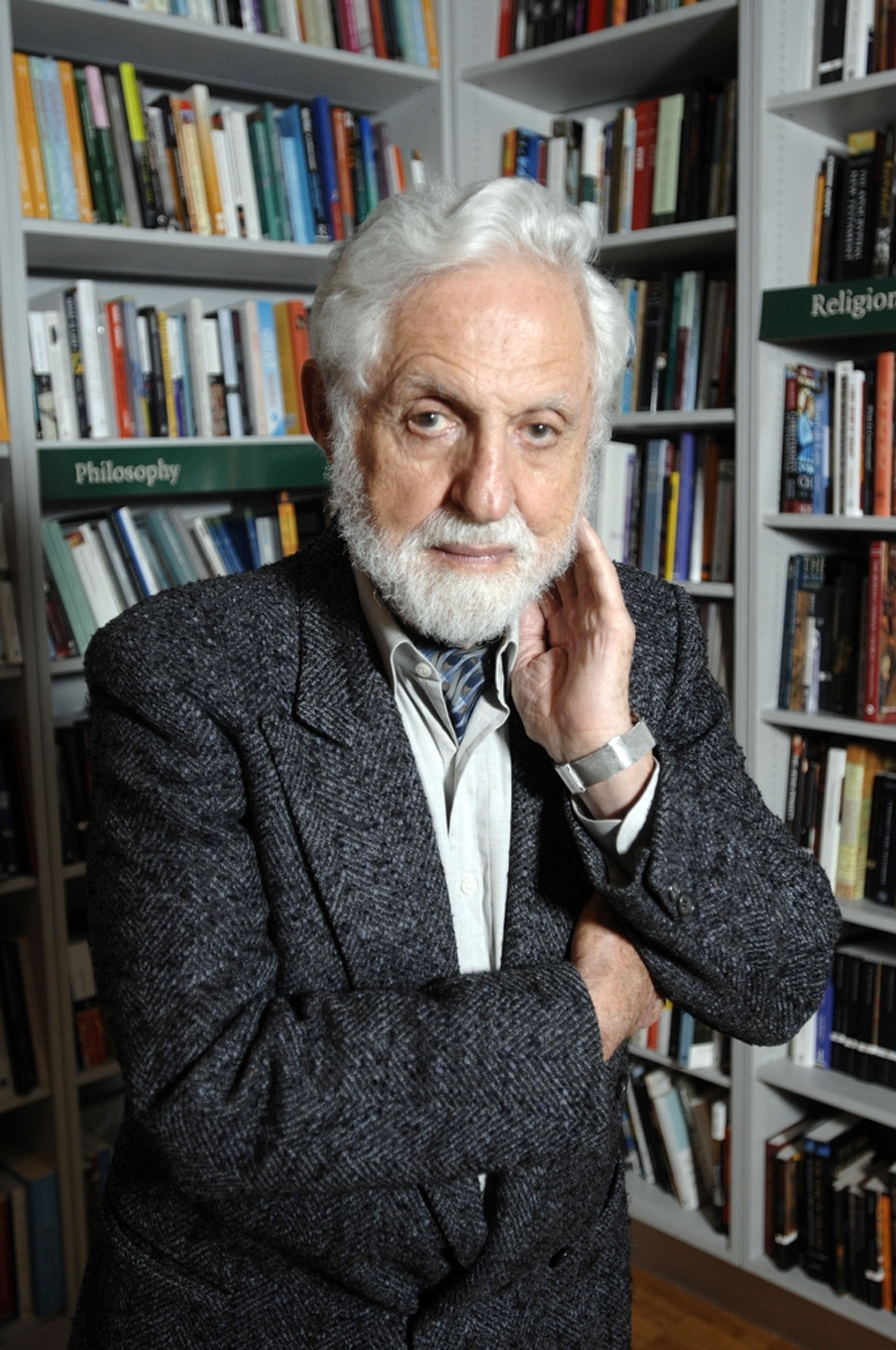
Dr. Carl Djerassi (Rutgers News)
Modern contraception pioneer Dr. Carl Djerassi died last Friday in San Francisco. He was 91 years old, and had suffered from complications of liver and bone cancer.
Often called the father of The Pill, Djerassi found an essential component of the now-common family planning product. In 1951, while working as a researcher at Syntex in Mexico City, he and two others successfully synthesized norethindrone, a progestin that later provided the base of the modern birth control pill. Djerassi and his team received a patent for their discovery.
Initially, the scientists thought that norethindrone would help fertility, but they soon realized that it served another purpose. The team knew that progesterone inhibited ovulation during pregnancy. They modified the progestin’s basic structure and added ethisterone, a compound thought to be devoid of medical value. (Warning: science-speak ahead.)
Djerassi’s team found that they could change the structure of progesterone to increase its potency eightfold. This progesterone analogue was strong enough to work when injected, but lost its potency when administered orally…Djerassi’s group made the same chemical modification in ethisterone that they had earlier made in progesterone.
(Interesting side note: At the time, Djerassi wasn’t researching anything to do with conception when he and his team made his famous discovery. He was actually looking for a compound that could be used to treat cancer. Happy accident, as they say.)
After five years of clinical trials, the birth control pill began reached the mass market, and cracked 1960s sexual norms wide open. (And we’re still feeling the effects of it today.)
This wasn’t his only big discovery: Djerassi also patented the first antihistamine, the drug that prevents allergy symptoms.
During his lifetime, Djerassi received 34 honorary doctorates. He was also the recipient of the National Medal of Science for chemistry in 1973, and the National Medal of Technology and Innovation in 1991. The two awards are the U.S.’s highest science and technology honors, respectively.
In addition to his scientific accomplishments, Djerassi also wrote plays (some performed off-Broadway) and science-fiction, founded a company to control insect growth, and started an artists’ colony in his property in California.
Dr. Djerassi’s contributions to family planning were, and continue to be, a boon to women the world over, and his work will continue to hold great value for the coming generations.
Thank you, Dr. Djerassi. Thank you.


 Sex & Stats: Where Numbers Come to Bang